Rose Floral Embroidery Design: A Practical Review
When you download a new embroidery design, the real review happens not in the file manager, but on the fabric. I’m looking at this Rose Floral Embroidery Design as a designer who needs reliable, beautiful files for client projects and my own shop’s merchandise. Let’s talk about what this design actually brings to the hoop.
First Impression: Where This Rose Belongs
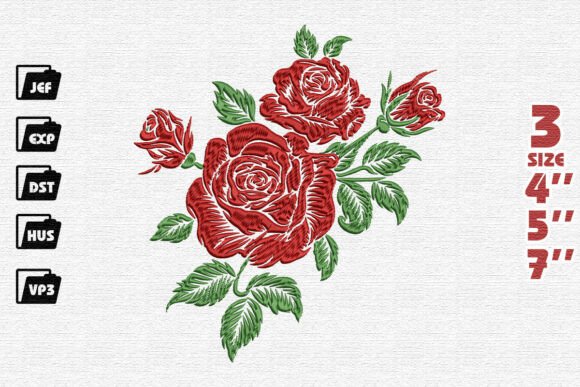
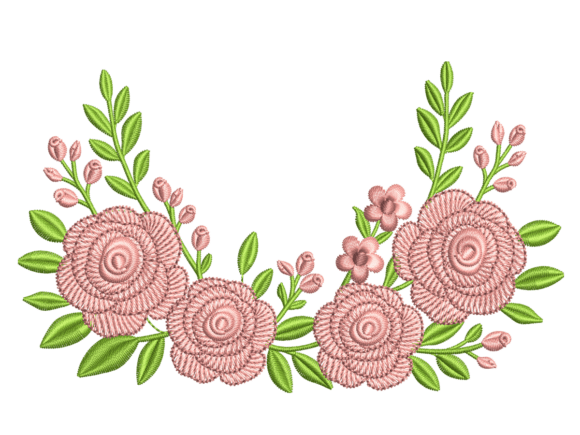
The moment you open this embroidery file, its mood is clear. It’s a classic, generous bouquet—not overly fussy, but full and inviting. The layout has a natural flow that feels both elegant and approachable. This isn’t a tiny, minimalist motif; it’s a statement piece. My first thought was how perfectly it would anchor a centerpiece on a tote bag or a pillow cover, or serve as a beautiful focal point on the back of a sweatshirt. For a small business owner, that’s key: a design that carries visual weight without being overwhelming.
Its personality leans toward timeless giftability. I immediately pictured it on a premium tea towel for a boutique, a personalized baby blanket, or a linen apron as a special holiday gift. The floral theme, specifically roses, communicates care and craftsmanship. For an Etsy seller or a maker at a craft fair, that’s a powerful shorthand for quality.
Performance in Real Projects: A Versatile Anchor
In practical use, this Rose Floral Embroidery Design acts as a versatile anchor for a range of products. On a custom apparel item, like a high-quality cotton t-shirt or a cozy sweatshirt, it provides that “finished designer” look that customers appreciate. Stitched onto a sturdy canvas tote bag, it becomes the bag’s defining feature, elevating it from a simple carrier to a handmade product with value.
For baby items or nursery decor, the floral theme is soft and welcoming, though I’d lean toward lighter, more pastel thread colors to keep the mood gentle. As an embroidered patch, it would be substantial and detailed, perfect for applying to caps or jackets, though its density would require a good stabilizer and careful hooping on curved surfaces like caps.
In a commercial embroidery context—say, for a small shop’s branded merchandise or a series of kitchen towels for a local market—this design offers consistency. You could use it across a product line, creating a recognizable collection that builds brand consistency. For digital product sellers creating printable mockups, this kind of design is a strong asset; its detail and clear shape make for compelling preview images that engage buyers.
Careful Application: Knowing Your Fabric and Hoop
With any design of this detail and likely density, there are places to proceed with caution. On very textured fabrics, like some linens or boucle, the finer leaf details might lose clarity. On thin or stretchy fabric, the stitch density could potentially lead to puckering without the correct stabilizer strategy. Dark fabrics will require thoughtful thread color choices to ensure the roses don’t get lost.
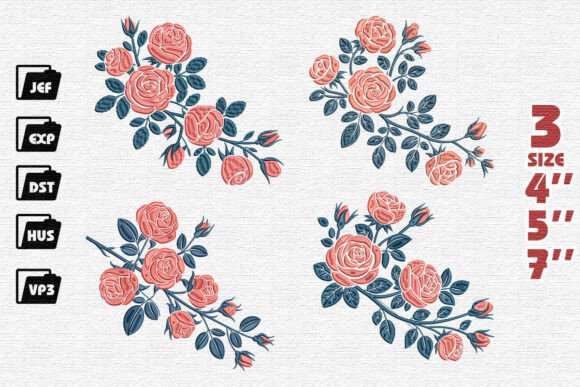
Because it’s a bouquet layout with likely intricate areas, I wouldn’t try to force it into a very small hoop size. It deserves the space to breathe. For products that need frequent, vigorous washing—like everyday kitchen towels or children’s apparel—a robust stabilizer and high-quality thread are non-negotiable to maintain the design’s integrity over time. Testing on a scrap of your actual project fabric is always the first, most critical step.
How This Design Elevates Your Finished Product
From a business and craft perspective, this embroidery file affects more than just the stitch. It enhances visual appeal significantly, turning a plain item into a curated one. Stitching clarity is paramount; a well-executed, detailed floral like this communicates professionalism and skill, which builds customer trust. For a handmade presentation, it says you chose a design with substance.
Its giftability is high—it feels special and considered. For recognition, using it across a product line creates a signature look. Ultimately, it’s a design that engages a buyer because it looks complete and intentional, not like a generic placeholder. That engagement is what turns a viewer into a customer.
Practical Notes from the Hoop
Before you run this Rose Floral Embroidery Design on your final project, here’s my checklist from the designer’s bench. Always test on scrap fabric first. This tells you everything: how the satin stitches and fill stitches behave, whether the thread colors you’ve chosen have enough contrast on your specific background, and if any small details need adjustment for your machine or material.
Review the stitch density in your test. Is it suitable for your fabric weight? Confirm the hoop size you’ll need by inspecting the design’s dimensions—don’t guess. I also recommend testing the design in black and white mockups for your product listings; this helps you see its form clearly without color bias.
Compare how it looks conceptually on both light and dark fabric backgrounds. A design can feel entirely different on white versus navy. Use the proper stabilizer for your fabric type; this is especially important for a design with potentially dense areas like the rose centers. Finally, check whether the design’s licensing clearly allows for the use you intend—whether for personal gifts or commercial projects selling finished items. That clarity is the foundation of a responsible craft business.
In summary, this Rose Floral Embroidery Design is a strong, classic file with the visual weight to anchor beautiful handmade products. Its success lies in pairing it with the right fabric, thoughtful preparation, and a clear vision for the finished product it will become. It’s a design that, when stitched well, fulfills that promise of a beautiful floral decoration for clothes, towels, linens, and bags—exactly as described.